10 November 2026By Stephane Cornille
How to Get More Sales From Your Art and Antiques Website
TL;DR: Your website should do more than showcase your stock. It should help collectors find you through Google and ChatGPT, make it easy for customers to buy when they're ready, and show you what they're viewing, saving and searching for. KANDINSKY brings all three together.
Discovery: Can collectors find you & your works?
Conversion: Can collectors find what they want and buy it?
Business Analytics: What are collectors interested in?
Most dealers and galleries still treat their website as a brochure. It's a calling card that says who they are, what they sell and how to visit their shop or gallery.
Your website can do much more than that. Discovery no longer starts when a collector walks through your door. It starts online, often before the collector even knows what they're looking for.
I run COMRADE, an online gallery that sells vintage Soviet posters and paintings. I've sold more than 1,000 works online over 8 years.
Discovery: Can collectors find you & your works?
Only if search engines and AI tools can read every work on your website.
An Instagram page and a well-designed website used to be enough. Not any more. A dealer can have an active Instagram and a beautiful website and still be almost invisible to collectors.
The next generation of collectors is online first. More and more, they use AI tools to find the works they like and buy them. In 2026, 22% of collectors used apps or AI tools, up from 4% in 2024 (Art Basel & UBS Survey of Global Collecting 2026).
Search engines and AI tools need clear, structured information to understand your website. Most dealers already have it. It's just sitting in a spreadsheet or a PDF instead of on the website.
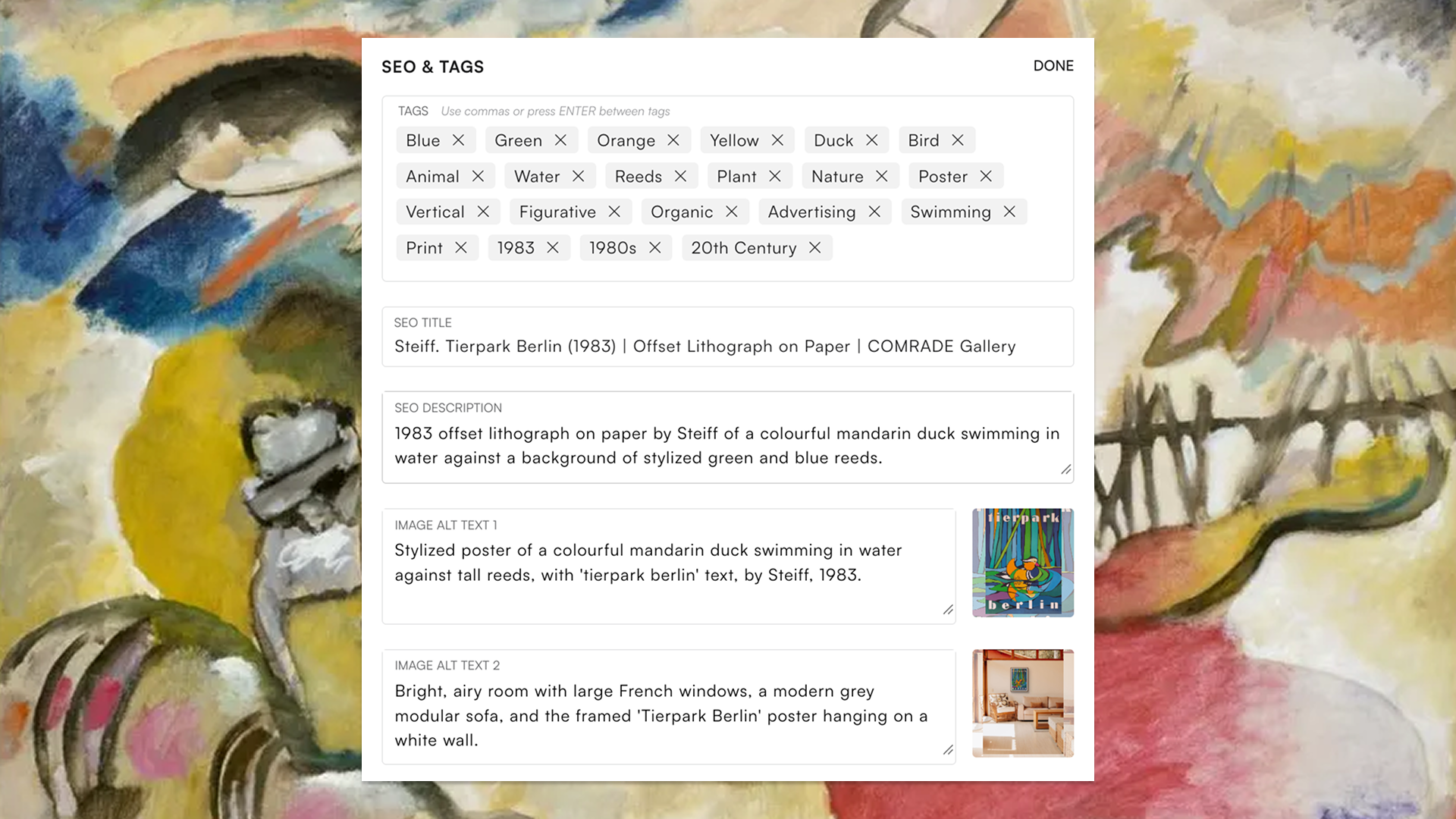
Every work needs its own page, with the artist name, title, date, medium or material, dimensions, images, and other details that matter. Then go one step further. Add the theme, style, colours and other details, both in the description and as tags.
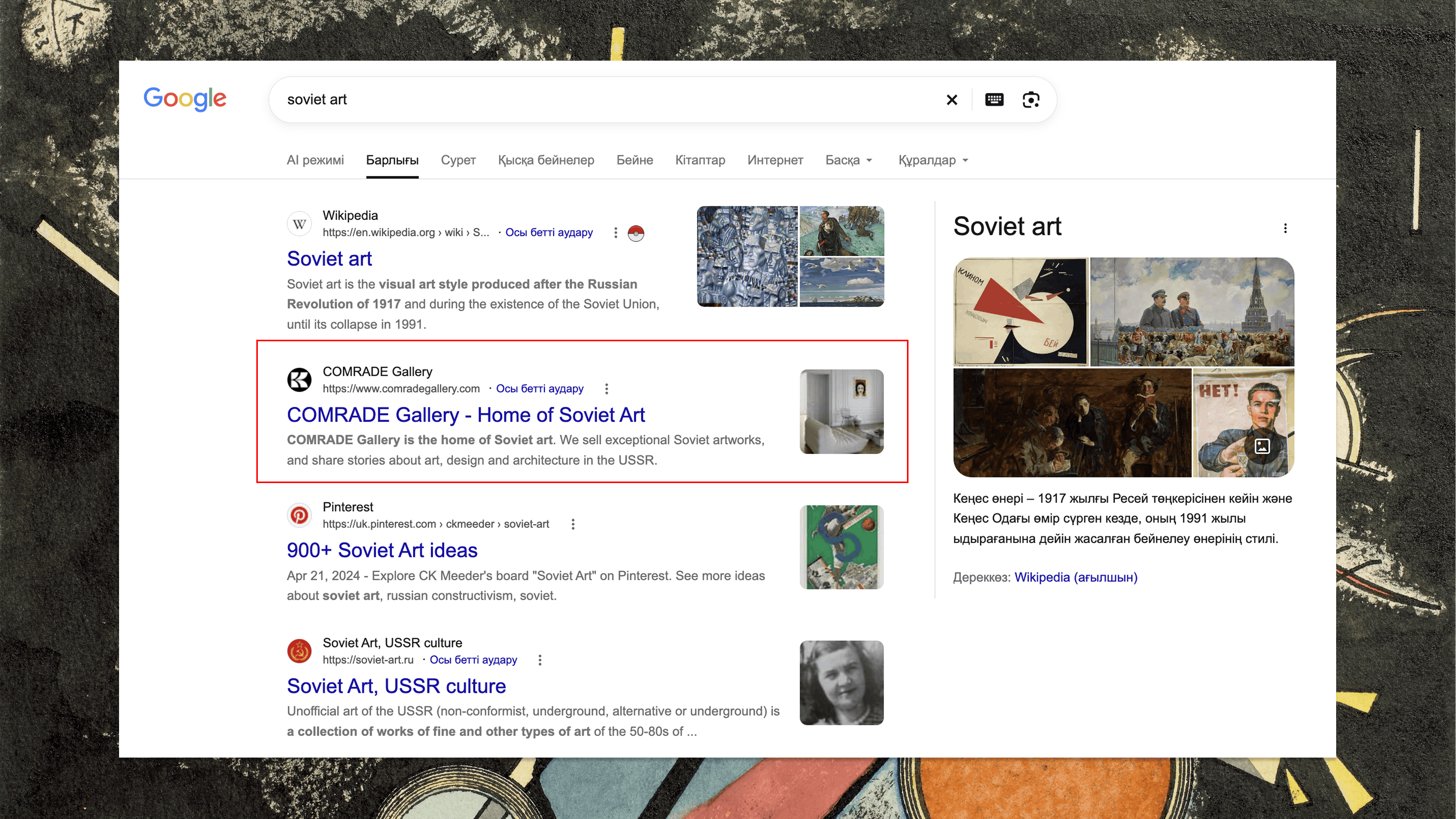
That's how COMRADE comes second only to Wikipedia on Google when people search "soviet art". It's also how first-time buyers now find me through ChatGPT.
At a minimum, every work on your website needs:
A crawlable page. Its own public page that search engines and AI crawlers, like OpenAI's OAI-SearchBot, can open.
A place in your XML sitemap, and a robots.txt that lets crawlers in. The sitemap lists the pages you want search engines to find. Robots.txt controls which crawlers get access.
Metadata. A clear SEO title, meta description and image alt text on every page.
Structured, searchable details. The key facts as clear, consistent text in labelled fields (artist or maker, title, medium, dimensions), plus the subject, style, period and colours.
KANDINSKY writes the tags, SEO titles, descriptions and alt text for every work with AI automations.
Conversion: Can collectors find what they want and buy it?
Only if the page for each work gives them everything they need to buy.
Getting collectors to your website is only the first step. Once they arrive, turn them into a sale or a subscriber.
As a new generation of collectors enters the market, discovery is shifting to work-first. A collector might find one work on Google, Pinterest or Reddit without ever having heard of your gallery, or even the artist.
My Pinterest account has 400k viewers per month, and of those 400k, 1,000 click on a shoppable pin which brings them to the artwork on my website where they can purchase in 2 clicks.
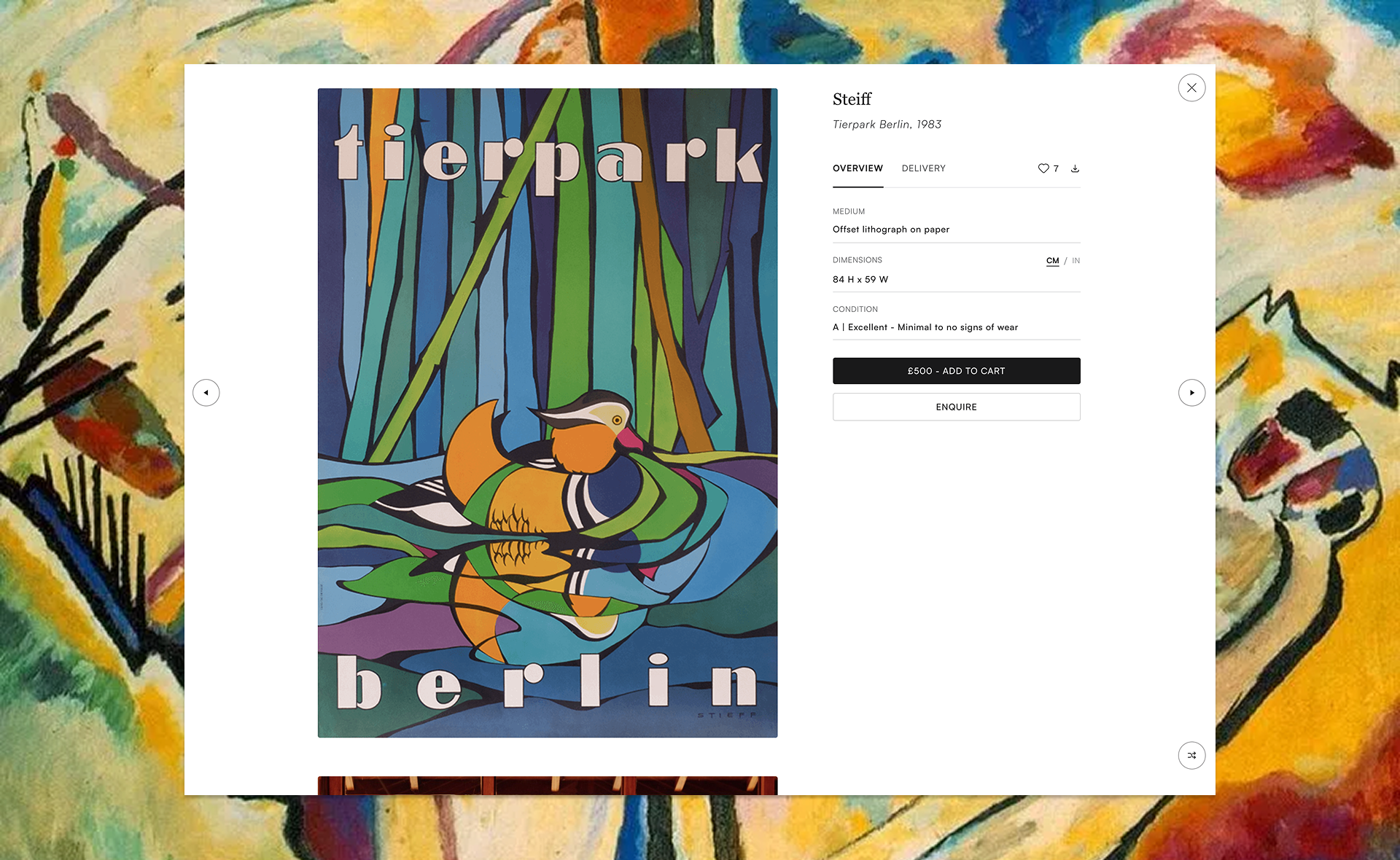
They land on the page for that individual work, not your homepage. That changes what your website needs to do. A work's page isn't just one page in your catalogue any more. It's where collectors start their journey.
Too many dealer and gallery websites make collectors work for basic information. The price is hidden behind "POA". Availability means sending an enquiry. Shipping isn't mentioned.
Retail has spent years removing this kind of friction. Much of the art and antiques trade still expects collectors to email for the price or the shipping cost.
Every work's page should give collectors everything they need to buy. Every extra step adds friction, and makes it more likely they leave and never come back.
No requesting prices.
No forced account creation.
No unnecessary forms or back-and-forth emails.
If a collector is ready to buy, make it easy for them.
Business Analytics: What are collectors interested in?
Your website can show you what collectors want before they buy.
The art and antiques trade has mostly worked offline, so there's been very little data. You couldn't link a collector to a work online and see what they saved to their wishlist, came back to, or looked at without buying.
A connected inventory, operations and website platform like KANDINSKY changes that. Dealers and galleries can manage their stock on real data, not just sales history and gut feel.
You can see each customer's views and purchase history, and get notified when a work enters your inventory that matches their taste - so you can reach out to them.
In KANDINSKY, you can drill down into each work, artist and category to see what's driving sales. You can compare:
which get the most views
which are saved most often
which have the highest margins
which get attention but don't sell
Engagement data shows what happened before the sale. Put engagement and sales data together, and a whole new world of data opens up, one you can use to sell more of your art or antiuques online.
FAQs
What should an art or antiques dealer's website do?
It has three jobs. Help collectors and AI tools find you and your works. Let collectors buy when they're ready, without asking for the price. And show you what collectors are interested in, from views and saves to margins, so you know what to buy and promote next.
How do I get my works found on Google and ChatGPT?
Give every work its own public page, listed in your XML sitemap, with a robots.txt that lets search engines and AI crawlers in. Add an SEO title, meta description and image alt text to every page, plus the artist or maker, date, medium, dimensions and tags for theme, style and colours.
Is an Instagram page enough to sell art and antiques online?
No. You can have an active Instagram and a beautiful website and still be almost invisible to collectors. Search engines and AI tools need clear, structured information on your own website, with one page for every work.
Should I show prices on my website?
Yes. Many collectors land straight on a work's page from Google, Pinterest or Reddit, without knowing you. If the price is hidden behind "POA", they have to email you, and every extra step makes it more likely they leave and never come back.